
Grinding chana dal is a traditional yet highly important process that forms the foundation of many Indian food products, especially besan (gram flour). From home kitchens to commercial flour mills, the way chana dal is ground directly affects the quality, texture, taste, and usability of the final product. Despite its everyday use, many people are unaware of how grinding chana dal works and why it matters so much.
This detailed guide explains what grinding chana dal means, how it influences quality and texture, the different grinding methods, and where the final product is used. Whether you are a home cook, food business owner, or someone curious about food processing, this blog will give you complete clarity.
What Is Chana Dal?
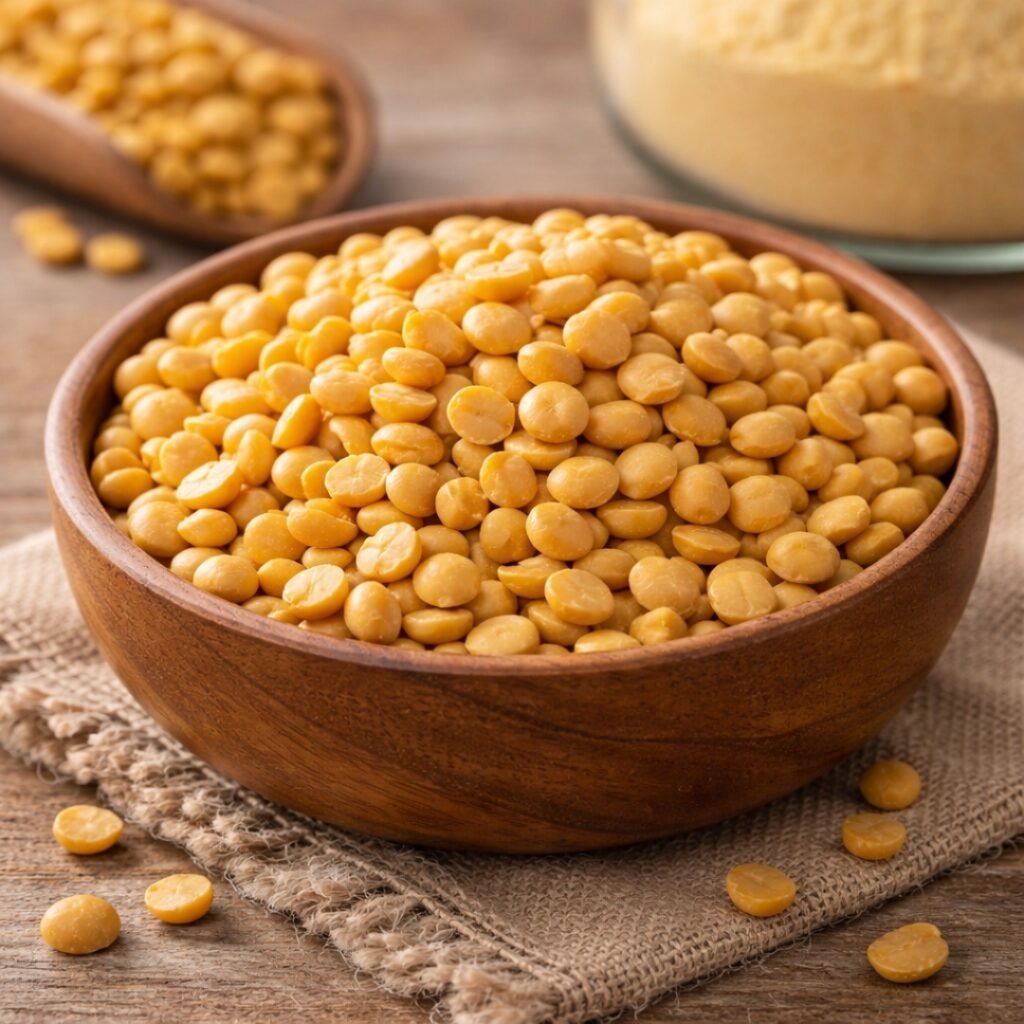
Chana dal is obtained by splitting whole Bengal gram and removing its outer skin. It is one of the most widely used pulses in Indian households due to its rich flavor, high protein content, and versatility. Chana dal is used both in its whole form and after grinding it into flour.
When chana dal is ground properly, it transforms into besan, which is a key ingredient in snacks, sweets, gravies, and packaged food products.
What Does Grinding Chana Dal Mean?
Grinding chana dal refers to the process of breaking down clean, dried chana dal into a powdered or semi-powdered form using mechanical or traditional grinding techniques. The goal is to achieve the desired fineness without damaging the natural flavor, aroma, or nutritional value of the dal.
This process involves multiple stages such as cleaning, drying, grinding, and sieving. Each stage plays a crucial role in determining the final quality of the flour.
Why Grinding Quality Matters
The quality of grinding directly impacts:
- Texture of the flour
- Taste of prepared dishes
- Cooking performance
- Shelf life
- Nutritional retention
Improper grinding can result in uneven particles, overheating, bitterness, or loss of aroma. High-quality grinding ensures consistency and reliability, especially for commercial use.
Click here to see our full product line
Grinding Process of Chana Dal (Step-by-Step)
1. Cleaning and Sorting
Before grinding, chana dal is thoroughly cleaned to remove dust, stones, broken grains, and impurities. High-quality output always begins with clean raw material.
2. Drying
The dal must have the correct moisture level before grinding. Excess moisture can cause clumping, while over-dried dal may burn during grinding. Proper drying ensures smooth milling.
3. Grinding
Chana dal is ground using different methods depending on the desired texture. Grinding speed and temperature control are critical to avoid overheating.
4. Sieving
After grinding, the flour is passed through sieves to separate coarse particles. These particles may be reground to achieve uniform texture.
Different Methods of Grinding Chana Dal
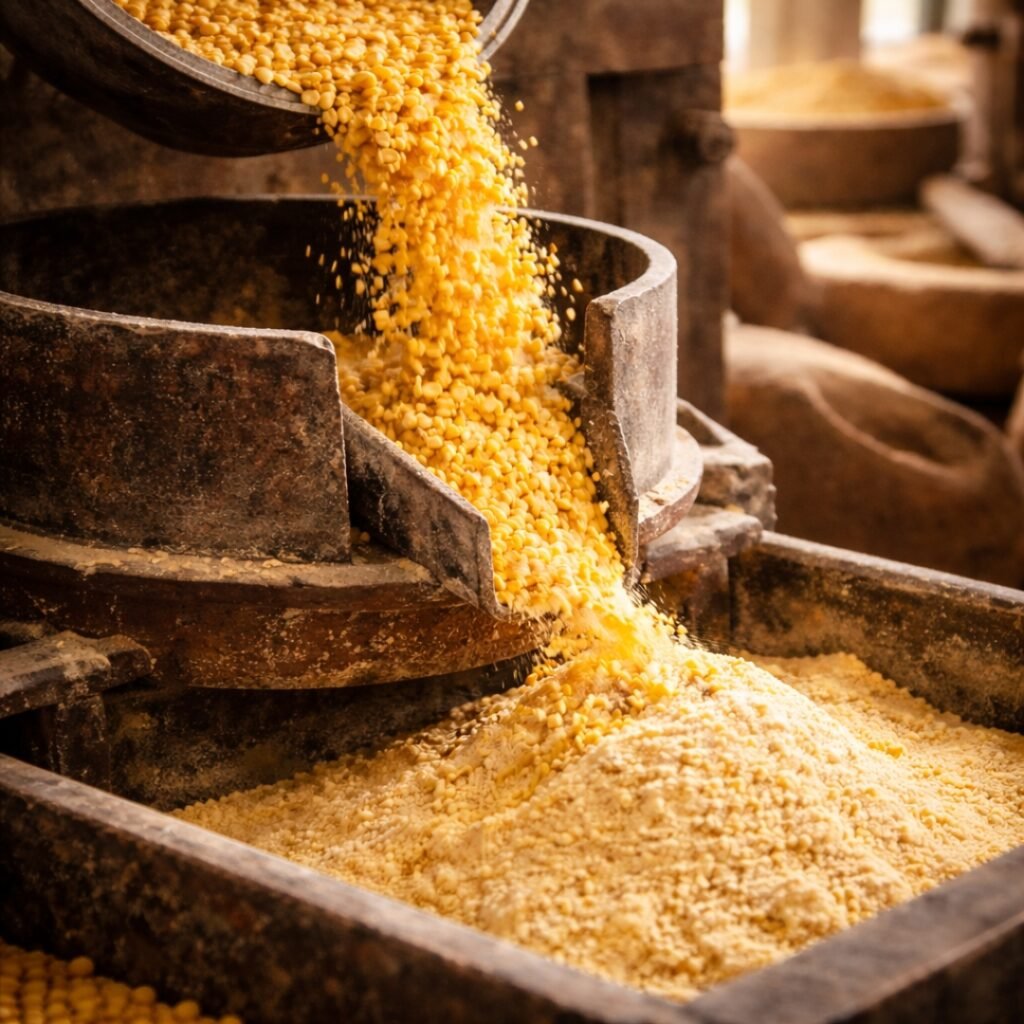
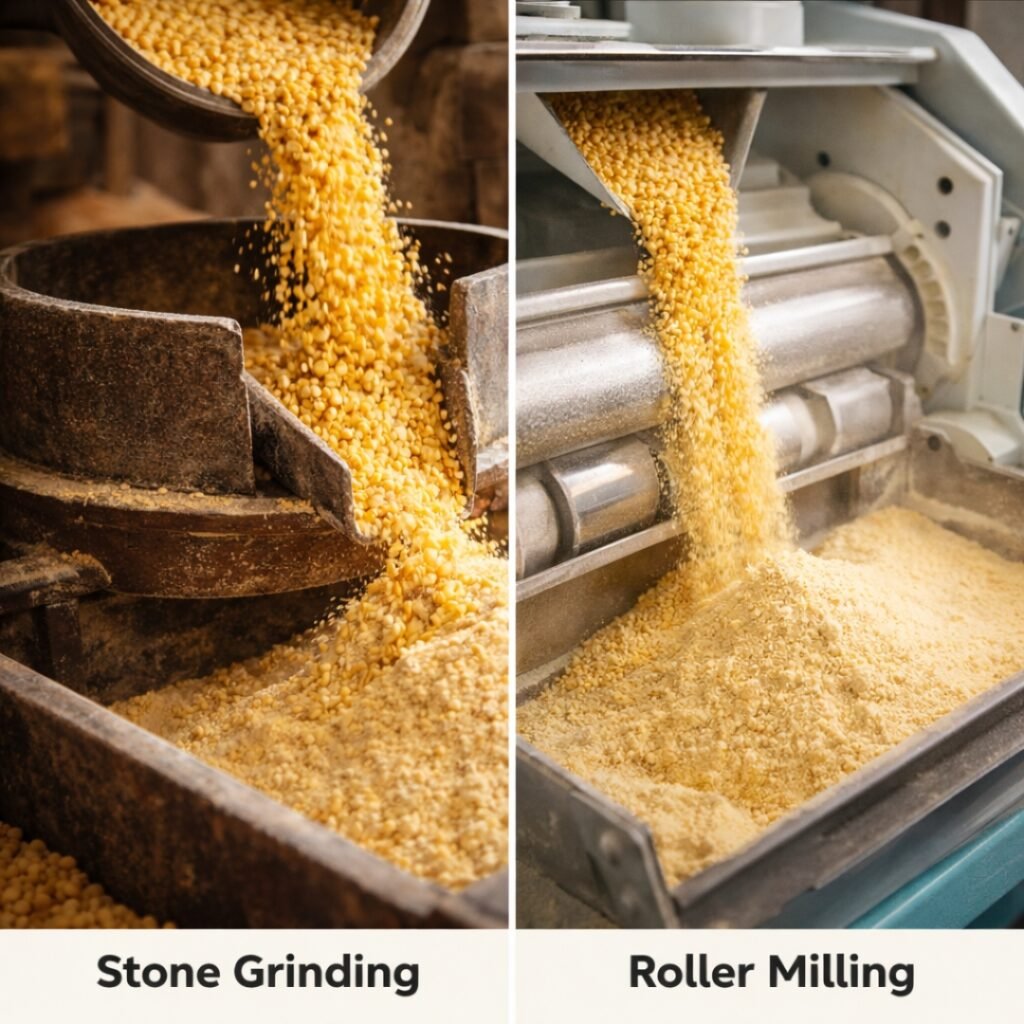
1. Stone Grinding
Stone grinding is a traditional method where dal is crushed slowly between stones. This method generates less heat, helping preserve natural oils, aroma, and nutrients. It is often preferred for premium-quality besan.
2. Roller Milling
In this modern method, rollers crush the dal under controlled pressure. It is faster and suitable for large-scale production, though temperature control is essential to maintain quality.
3. Hammer Milling
This method uses high-speed rotating blades to break down chana dal. While efficient, excessive speed may generate heat and affect flavor if not properly managed.
Understanding Texture After Grinding
Texture is one of the most important outcomes of grinding chana dal.
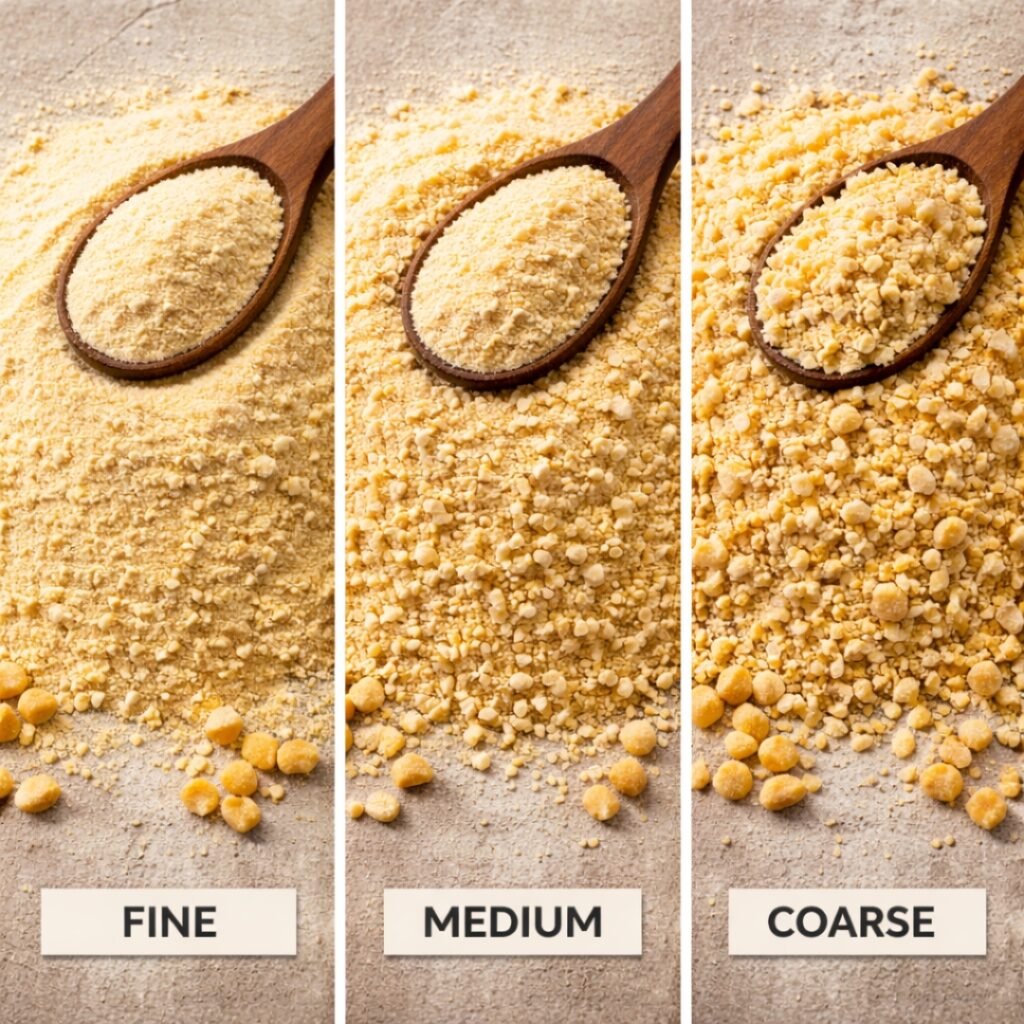
Fine Texture
Finely ground chana dal produces smooth flour that blends easily with liquids. It works best in desserts, smooth gravies, kadhi, and high-quality culinary preparations.
Medium Texture
Medium-ground flour is slightly grainy and works well for pakoras, chilla, and snacks where crispiness is desired.
Coarse Texture
Coarse grinding results in visible particles and is often used in specialty snacks or traditional regional recipes.
Uniform texture ensures even cooking and better taste, while uneven grinding may lead to raw or bitter flavors.
How Grinding Affects Quality
Flavor Retention
Slow and controlled grinding prevents burning and preserves the natural nutty taste of chana dal.
Color
Proper grinding maintains a natural pale yellow color. Overheating may darken the flour.
Aroma
Freshly ground chana dal has a mild, earthy aroma. Poor grinding can result in stale or oily smells.
Shelf Life
Flour ground at controlled temperatures stays fresh longer, while overheated flour may spoil faster due to oil oxidation.
Nutritional Impact of Grinding Chana Dal
When chana dal is ground correctly, it retains:
- High plant-based protein
- Dietary fiber
- Iron and magnesium
- Complex carbohydrates
- Naturally gluten-free properties
Excessive heat during grinding can reduce nutritional value, which is why quality-focused grinding methods are essential.
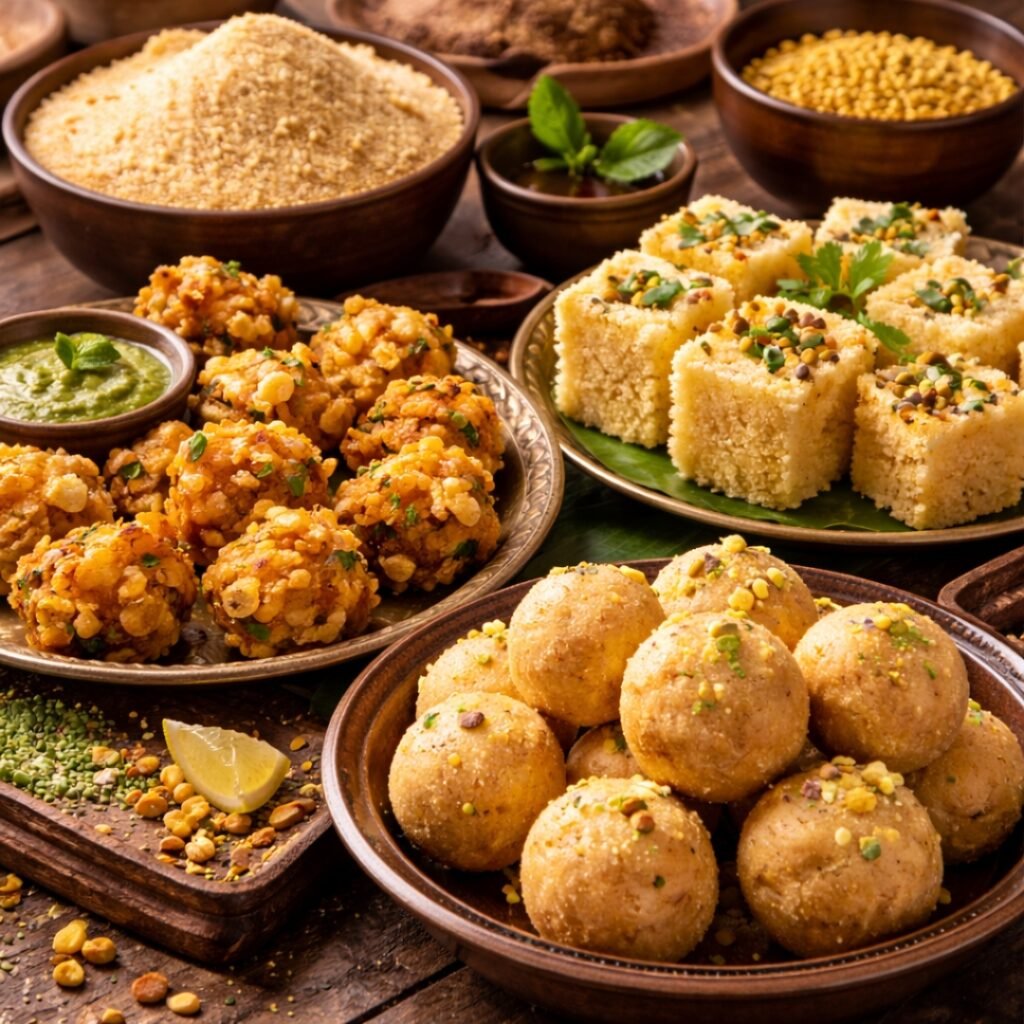
Uses of Ground Chana Dal (Besan)
Traditional Indian Cooking
- Pakoras and bhajiyas
- Kadhi
- Dhokla
- Chilla
Indian Sweets
- Besan laddoo
- Mohanthal
- Besan barfi
- Halwa
Commercial & Modern Uses
- Ready-to-mix products
- Gluten-free baking
- Protein-rich snacks
- Food processing industries
The texture achieved during grinding determines which application the flour is best suited for.
Click here to contact us to buy our premium products
How to Identify Well-Ground Chana Dal Flour
- Feel Test: Rub between fingers; it should feel smooth and consistent
- Mixing Test: Mix with water; it should blend without lumps
- Smell Test: Fresh flour smells pleasant and nutty
- Visual Check: Color should be natural, not overly bright
Storage After Grinding
To maintain quality after grinding:
- Store in airtight containers
- Keep away from moisture and sunlight
- Refrigerate for long-term storage
- Use dry utensils only
Proper storage preserves freshness and prevents spoilage.
Importance of Grinding Chana Dal for Businesses
For flour mills, sweet shops, and food manufacturers, grinding quality ensures:
- Consistent product texture
- Reliable cooking performance
- Customer satisfaction
- Brand trust and repeat sales
Poor grinding can damage reputation and lead to product rejection.
Conclusion
Grinding chana dal is much more than a mechanical process—it is a critical step that defines the quality, texture, taste, and nutritional value of the final product. From selecting clean raw dal to choosing the right grinding method and controlling temperature, every stage plays an important role.
Whether for home cooking or commercial production, properly ground chana dal delivers better flavor, smoother texture, and dependable results across a wide range of recipes. By understanding how grinding affects quality and usage, you can make informed choices and ensure superior outcomes in every dish.
A. Yes. High-speed grinding generates friction heat, which can “cook” the flour prematurely. This often results in a slightly bitter taste and a loss of the natural nutty aroma. Slow-speed or stone grinding is best for flavor retention
A. Cold milling refers to grinding the dal at low temperatures (usually through slow stone rotations). This prevents the natural fats and proteins in the chana dal from breaking down, keeping the flour fresh and nutritious for longer.
A. lumping usually happens due to high moisture content in the raw chana dal or improper cooling after the grinding process. Agriprime ensures the dal is perfectly dried and cooled before packaging to prevent lumps.
A. Take a pinch and rub it between your fingers. It should feel uniform. If you feel random large grains mixed with powder, the sieving or grinding was inconsistent. It should also have a distinct, fresh smell the moment you open the packet.
Leave A Comment