
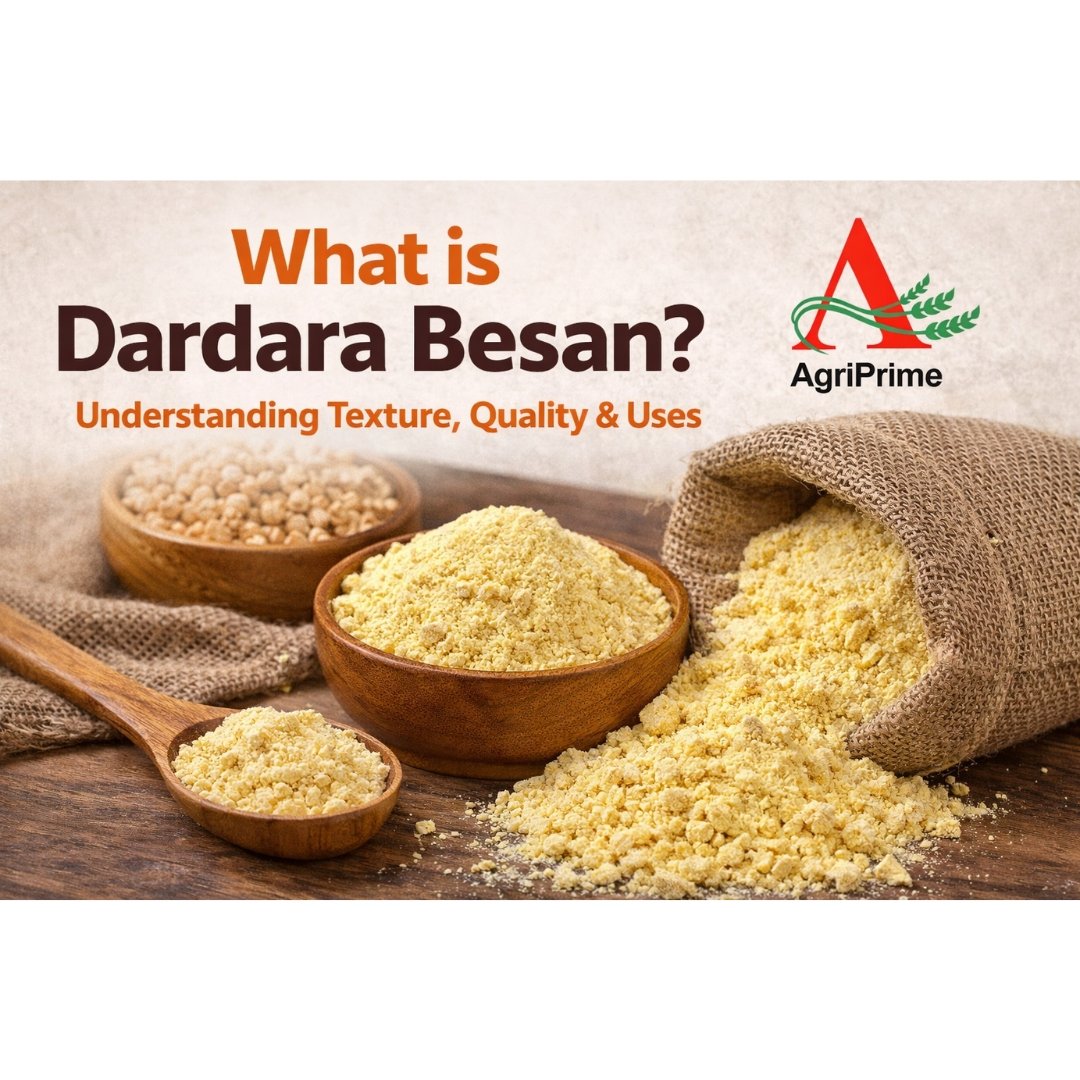
Besan, commonly called gram flour or chickpea flour, is an essential ingredient widely used in Indian cooking.. From crispy pakoras to melt-in-the-mouth sweets, besan plays a versatile role in everyday cooking. But not all besan is the same. You may have heard shopkeepers or sweet makers talk about “Dardara Besan.”
So, what exactly is and why is it preferred for certain recipes? This blog will help you understand what dardara besan is, how its texture differs, how to identify good quality, and where it is best used.
What Is Dardara Besan?
The word “dardara” literally means coarse or grainy.
It is a type of gram flour that is coarsely ground, unlike the regular fine besan commonly used for batters and gravies.
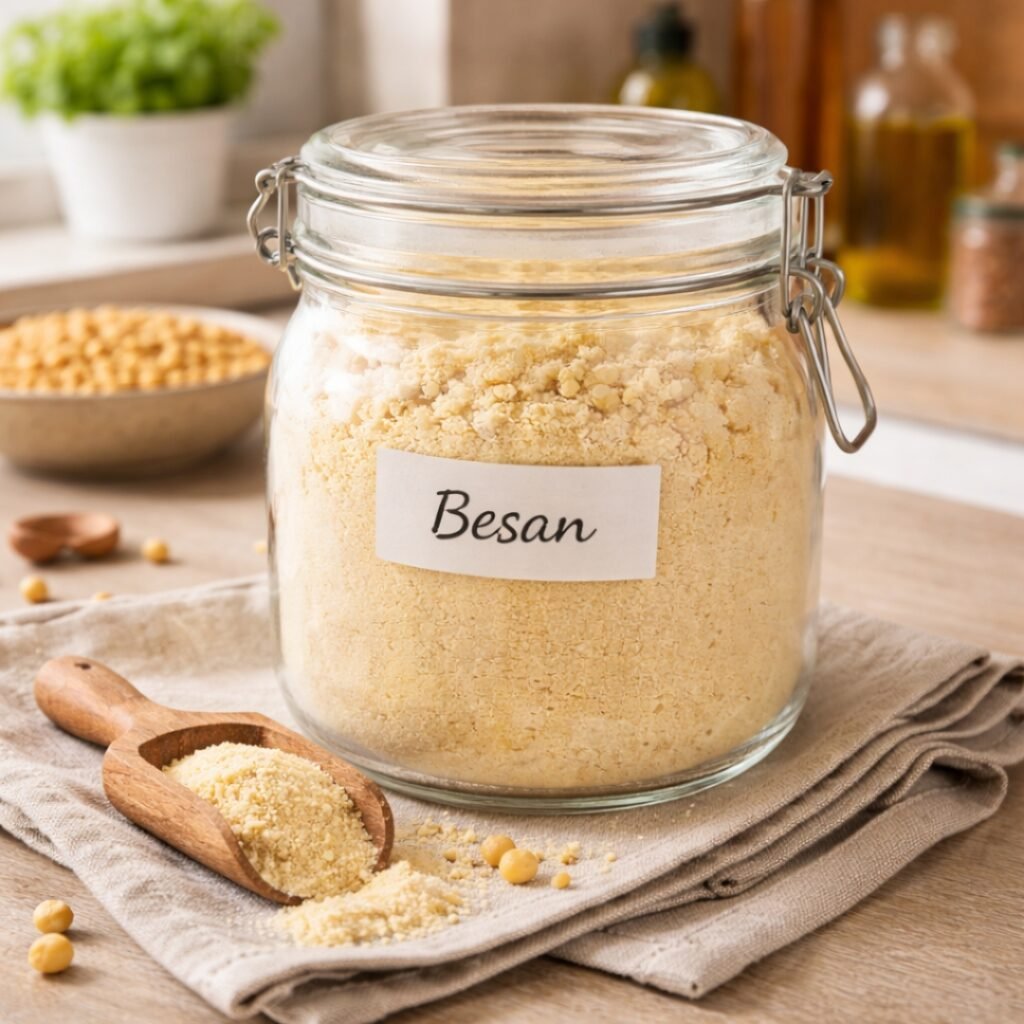
Instead of a smooth, powder-like feel, It has a slightly rough, granular texture. This texture is intentional and highly valued, especially in traditional Indian sweets and snacks.
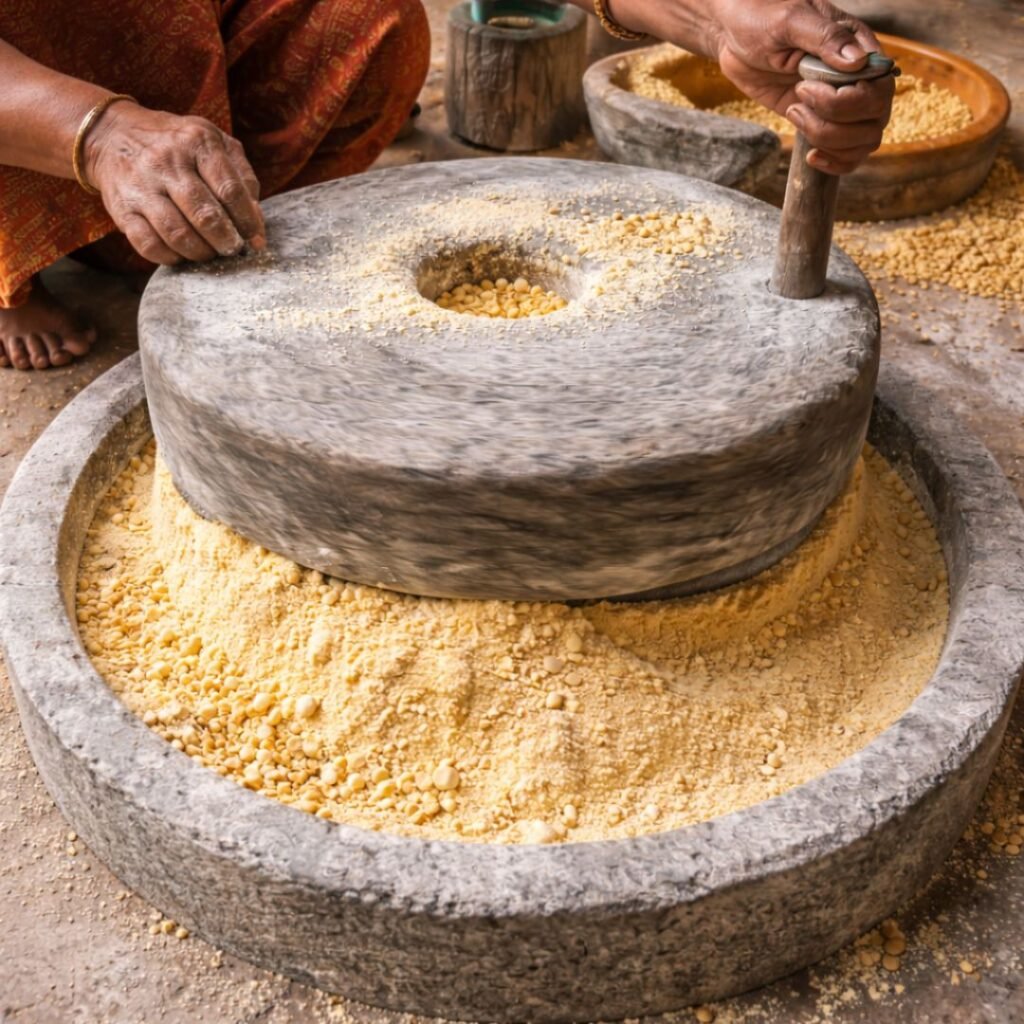
It is usually made by stone grinding (chakki grinding) or controlled milling, which helps retain the coarse granules of chana dal.
Texture of Dardara Besan
The most defining feature of dardara besan is its texture.
Key Texture Characteristics:
- Slightly coarse and grainy
- Not powdery or silky smooth
- Granules are visible when rubbed between fingers
- Absorbs ghee or oil slowly
- Gives a rich, crumbly mouthfeel
This coarse texture allows the besan to roast evenly, develop a nutty aroma, and provide structure to dishes—something fine besan cannot achieve as effectively.
To see our product line click here
Difference Between Dardara Besan and Fine Besan
Understanding the difference helps you choose the right besan for the right recipe.
| Aspect | Dardara Besan | Fine Besan |
| Texture | Coarse, grainy | Smooth, powdery |
| Grinding | Stone-ground or low-speed milling | High-speed milling |
| Oil Absorption | Slower, controlled | Faster |
| Taste | Nutty, rich | Mild |
| Best For | Sweets, ladoos, khaman | Pakoras, kadhi, gravies |
Both types are useful, but they are not interchangeable in many traditional recipes.
Quality of Dardara Besan: How to Identify the Best
Not all coarse besan is good-quality dardara besan. Here’s how you can check quality before buying or using it.
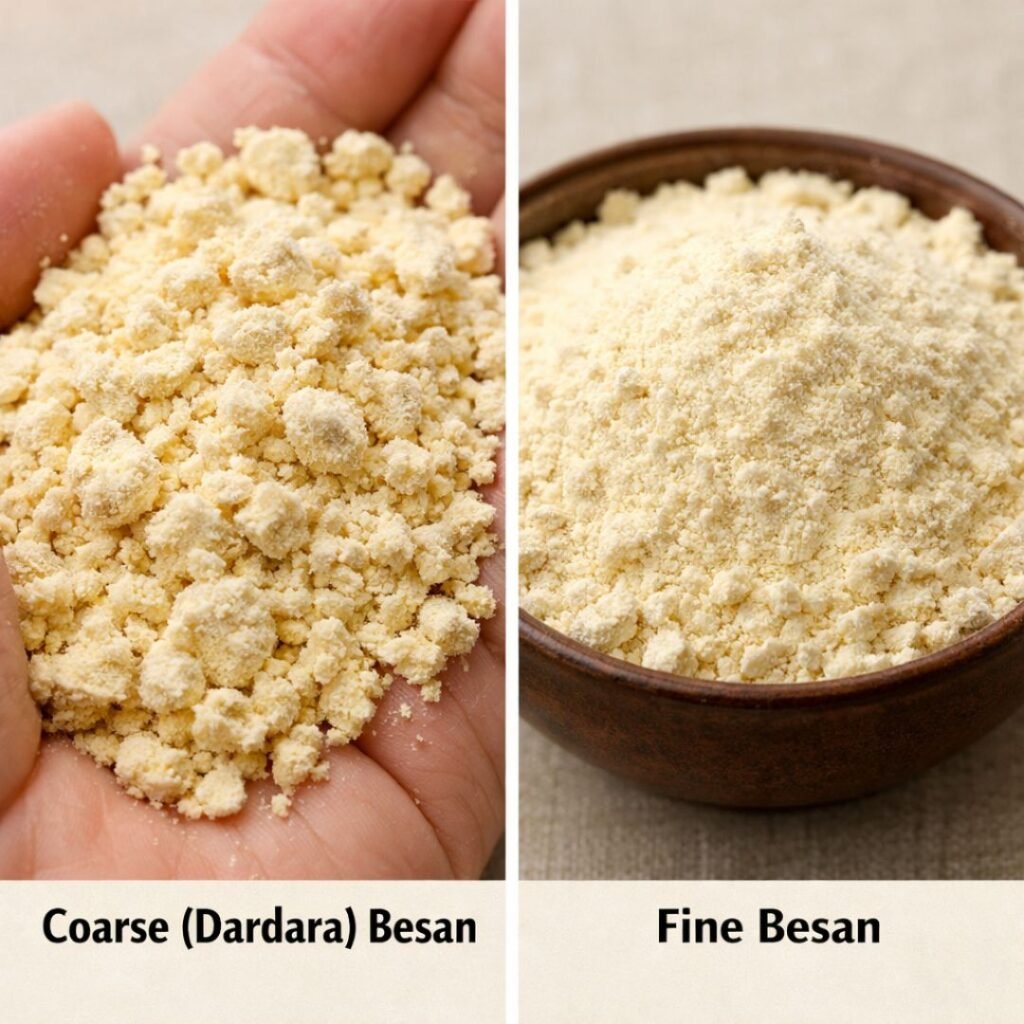
1. Color
- Should be natural yellow
- Avoid overly pale or very dark shades
- Bright artificial yellow may indicate additives
2. Aroma
- Fresh dardara besan has a mild, nutty smell
- Sour or stale odor means it is old
3. Touch Test
- Rub a pinch between fingers
- You should feel light granules, not lumps or dust
4. Roasting Behavior
- Good quality dardara besan roasts evenly
- It releases aroma gradually and doesn’t burn quickly
5. Ingredients
- High-quality dardara besan is prepared entirely from pure chana dal, without mixing in other grains.
- No mixing with maida, rice flour, or fillers
How Dardara Besan Is Made
Traditionally, It is prepared using slow grinding methods.
Process Overview:
- High-quality chana dal is cleaned and dried
- Dal is ground using a stone grinder or controlled mill
- Grinding is done at low speed to avoid overheating
- Sieving is minimal to retain coarse particles
This process ensures:
- Better flavor retention
- Natural oils stay intact
- Authentic texture is preserved
Modern high-speed machines often produce very fine flour, which is why traditional sweet makers still prefer chakki-ground dardara besan.
To View all product Click Here
Uses of Dardara Besan
It is especially loved in Indian sweets and festive foods, where texture and richness matter.
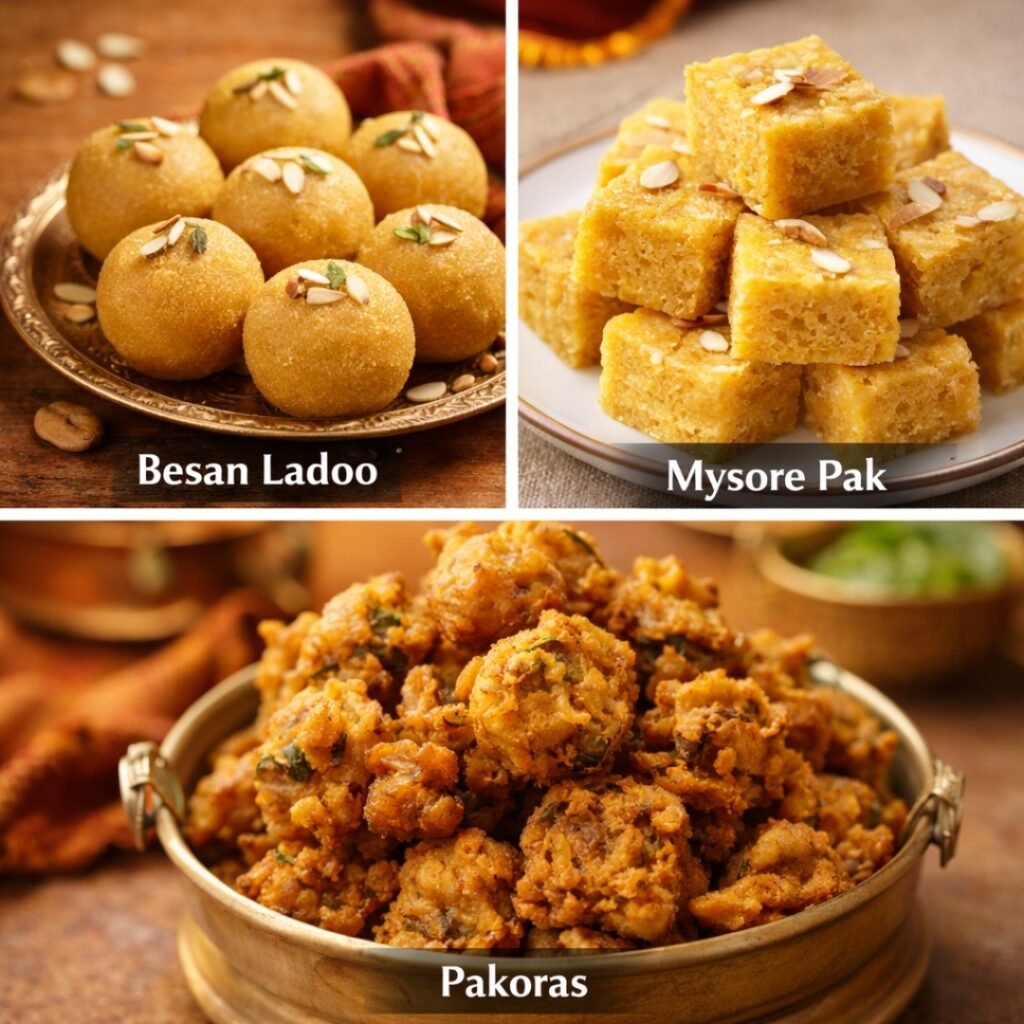
1. Besan Ladoo
This is one of the most common and widely loved ways dardara besan is used.
- Coarse texture gives ladoos body
- Absorbs ghee beautifully
- Results in grainy yet soft ladoos that melt slowly in the mouth
Fine besan makes ladoos sticky, while it makes them perfect.
2. Mysore Pak
Authentic Mysore Pak requires:
- Even roasting
- Controlled ghee absorption
- Slight graininess
It gives Mysore Pak its signature crumbly yet rich texture.
3. Mohanthal
A traditional Gujarati sweet that depends heavily on:
- Coarse besan texture
- Proper roasting
It helps achieve the layered, grainy finish that defines good Mohanthal.
4. Sev and Namkeen
Some varieties of sev and namkeen use dardara besan to:
- Improve crunch
- Maintain structure during frying
- Avoid sogginess
5. Festive & Temple Sweets
Many temple prasad sweets use dardara besan because:
- It stays stable longer
- Texture remains intact
- Flavor improves with time
Why Sweet Makers Prefer Dardara Besan
Professional halwais and sweet shops almost always choose it for premium sweets.
Reasons:
- Better control while roasting
- Enhanced aroma
- Traditional taste
- Consistent results
- Better shelf life in sweets
It may take more time to roast, but the final product is worth the effort.
Storage Tips
Because it retains natural oils, proper storage is important.
Best Practices:
- Store in an airtight container
- Keep in a cool, dry place
- Avoid moisture exposure
- Use within 2–3 months for best flavor
- Storing it in the refrigerator can help it stay fresh for a longer time, especially in warm or humid climates.
Always roast a small amount first to check freshness before using it in large quantities.
Click here to contact us to buy our premium products
Common Mistakes to Avoid
- Using fine besan instead of dardara besan for ladoos
- Over-roasting due to impatience
- Buying very cheap besan without checking texture
- Storing in open containers
These mistakes can ruin taste and texture.
Conclusion
Dardara besan is not just another type of gram flour—it is a special ingredient that defines the quality of many traditional Indian sweets and snacks. Its coarse texture, rich aroma, and controlled absorption of ghee make it irreplaceable in recipes like besan ladoo, Mysore Pak, and Mohanthal. Understanding the difference between dardara besan and fine besan helps you cook smarter and achieve authentic results at home. Whether you are a home cook or a professional sweet maker, choosing the right besan can elevate your dish from ordinary to truly special.
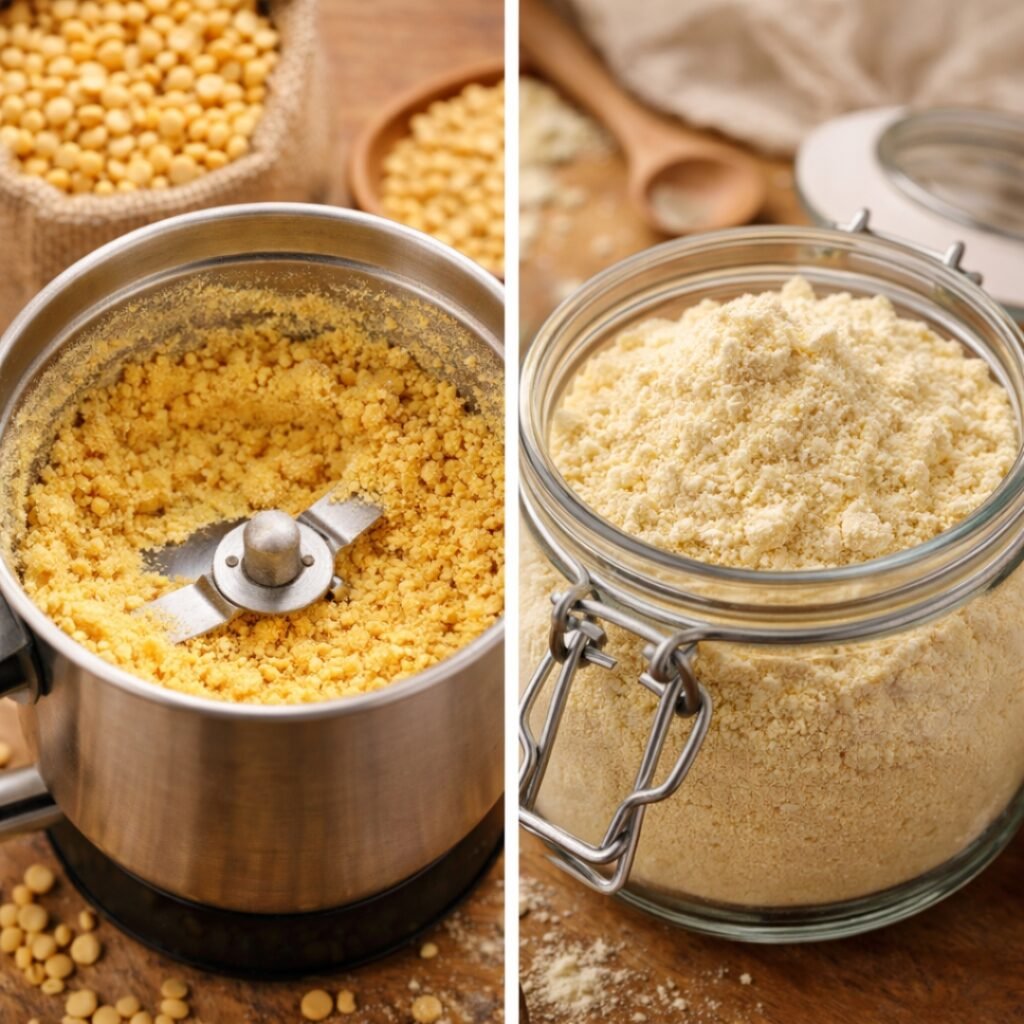
Yes, you can pulse dry chana dal in a high-powered blender, but for the most consistent “chakki” texture and nutty aroma, stone-ground commercial Dardara Besan is recommended.
Pure Dardara Besan made from 100% chana dal is naturally gluten-free. Always check the label to ensure no wheat or maida has been added as a filler.
Because it contains natural oils from the dal, it is best used within 3 months. Storing it in an airtight container in a cool place prevents it from turning rancid.
Leave A Comment