
Besan, commonly known as gram flour, is one of the most widely used ingredients in Indian cooking. From crispy pakoras and soft dhoklas to rich laddoos and flavorful kadhi, besan plays an essential role in both traditional and modern recipes. However, every type of besan does not deliver the same results. Among the various varieties available, fine besan is especially valued by sweet makers, professional chefs, and quality-conscious home cooks.
So, what makes it different? Why is it considered better than regular besan? And how do texture, purity, and processing quality impact cooking results? This detailed guide explains everything you need to know about it and why choosing the right one can significantly improve taste, appearance, and nutrition.
What Is Fine Besan?
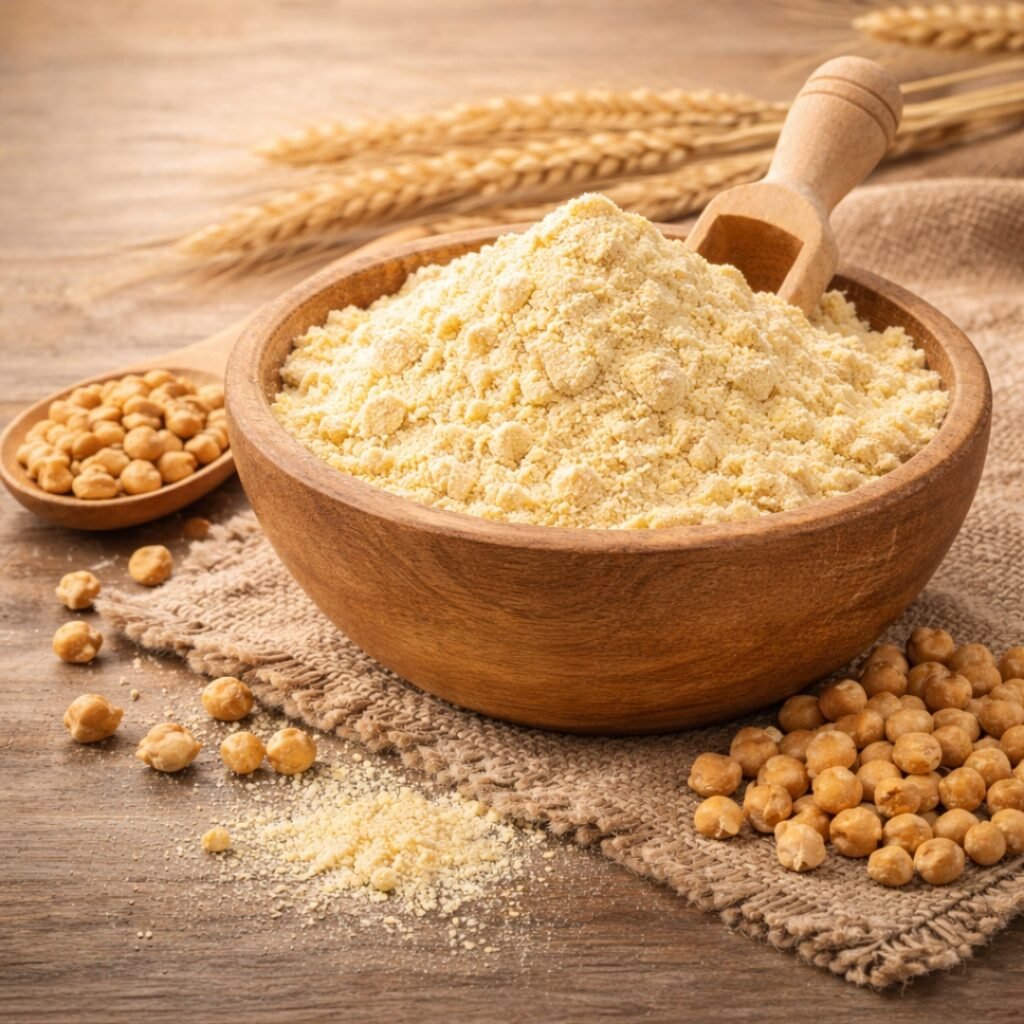
It is a refined form of gram flour produced by grinding carefully selected chana dal into a soft, uniform powder. Advanced grinding techniques are used to achieve consistent fineness, followed by multiple sieving stages to eliminate coarse particles.
The final result is a flour that feels silky to the touch and blends smoothly with liquids. Due to its uniform particle size, it delivers better cooking performance and a more polished finish in prepared dishes.
Key Characteristics of Fine Besan
- Blends easily with water or milk
- Forms smooth, lump-free batters
- Cooks evenly without raw taste
- Produces refined texture and finish in food
Because of these properties, fine besan is widely preferred for recipes where smoothness and consistency are essential.
Why Texture Is Important in Besan
Texture is the most noticeable factor that separates fine besan from ordinary besan. It directly affects cooking quality, taste, and presentation.
Smooth Consistency
It feels soft and powdery when rubbed between fingers. This smooth texture allows it to dissolve easily, ensuring uniform mixtures without clumps.
Better Cooking Results
Coarse besan may remain partially uncooked, especially in sweets, resulting in a grainy or raw flavor. Fine besan cooks evenly, delivering balanced taste and improved mouthfeel.
Enhanced Visual Appeal
Dishes such as kadhi, halwa, and besan barfi appear smoother and glossier when prepared with fine besan, giving them a professional and appetizing look.
Understanding Purity in Fine Besan
Purity is a major indicator of high-quality fine besan. Pure besan is made exclusively from chana dal without any added fillers or chemicals.
What Pure Fine Besan Contains
- Premium-quality chana dal
- Natural color and aroma
- No added starch, maida, or rice flour
- No artificial coloring or bleaching agents
Problems With Low-Quality or Impure Besan
Inferior besan may include fillers to increase volume or enhance color artificially. Although it may look bright, such flour often lacks authentic flavor, aroma, and nutritional value.
Clear here to read: what is dardara besan-understanding texture, quality &uses
Easy Ways to Check Purity
- Smell test: Fresh besan has a mild, nutty aroma
- Water test: It mixes smoothly without residue
- Taste test: Raw besan tastes slightly sweet, never bitter
Key Factors That Define the Quality of Fine Besan
1. Quality of Raw Chana Dal
Fresh, properly cleaned, and well-stored chana dal produces besan with better color, taste, and shelf life.
2. Grinding Method
Slow or stone grinding helps preserve natural oils and nutrients. Excessive heat during milling can damage flavor and reduce nutritional benefits.
3. Sieving and Refinement
Multiple sieving stages ensure uniform particle size, which is essential for consistent cooking and smooth texture.
4. Freshness
Freshly milled besan has superior aroma and taste. Older stock may develop a stale or oily smell due to oxidation.
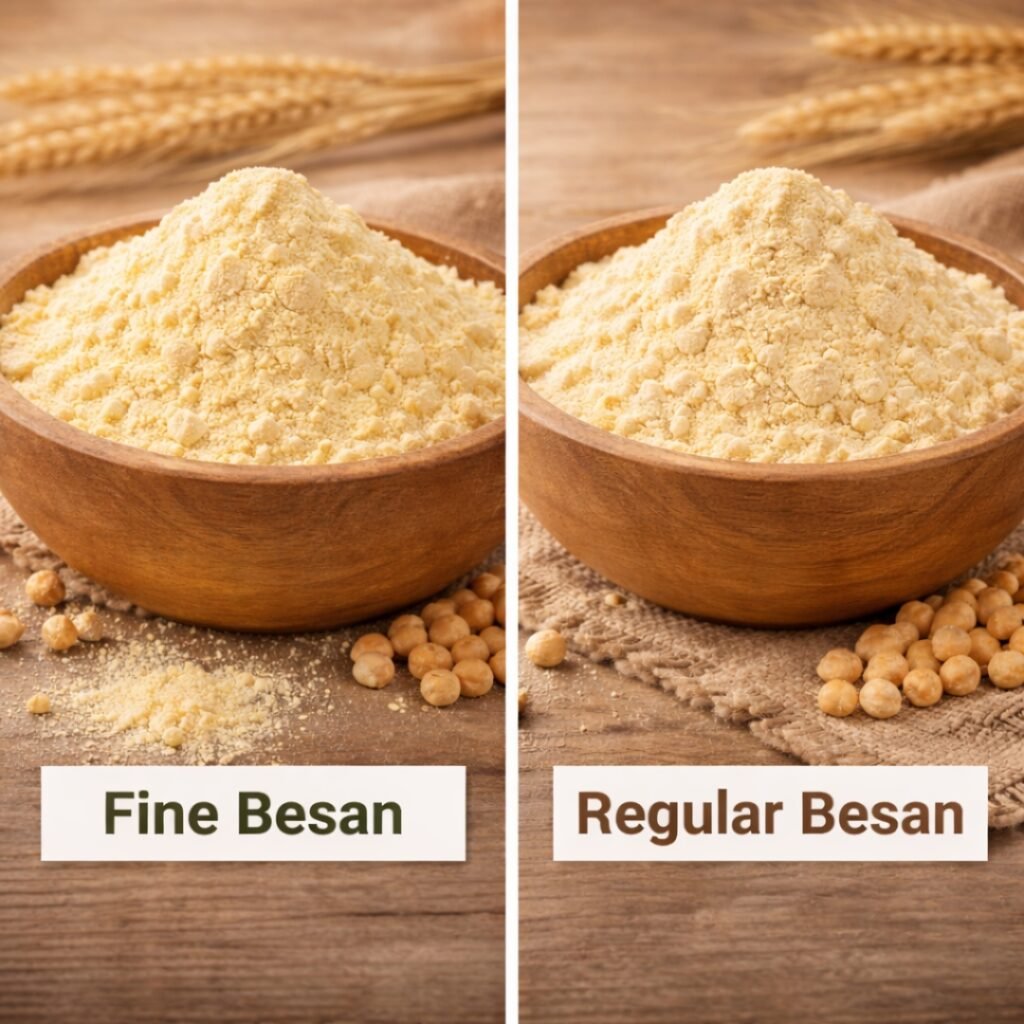
Fine Besan vs Regular Besan
| Feature | Fine Besan | Regular Besan |
|---|---|---|
| Texture | Very smooth | Slightly coarse |
| Mixing | Easy and lump-free | Requires more effort |
| Best used for | Sweets, gravies, kadhi | Pakoras, chilla |
| Taste | Mild and refined | Strong pulse flavor |
| Finish | Smooth and glossy | Grainy |
Click here to see our full product line
Uses of Fine Besan
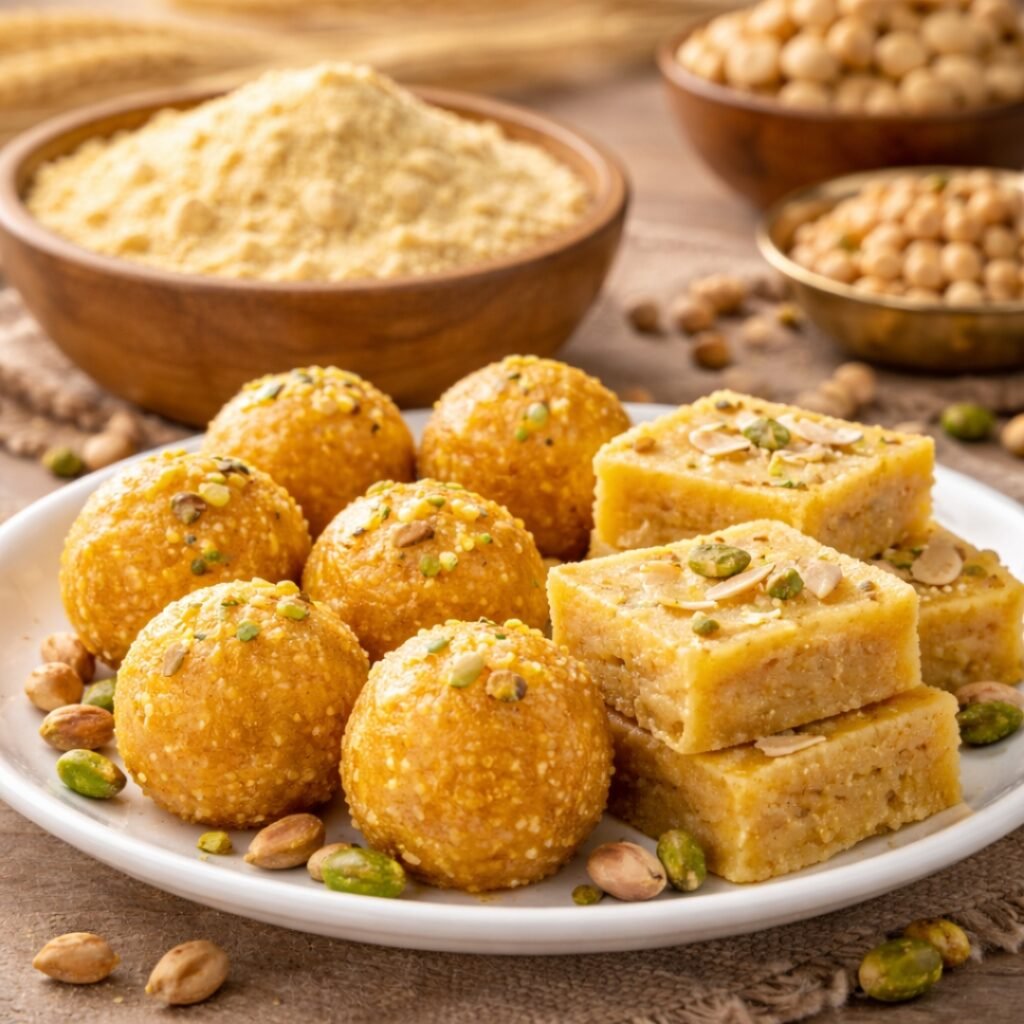
Traditional Indian Sweets
Fine besan is ideal for:
- Besan laddoo
- Mohanthal
- Besan barfi
- Sheera
Its smooth texture creates a melt-in-the-mouth experience.
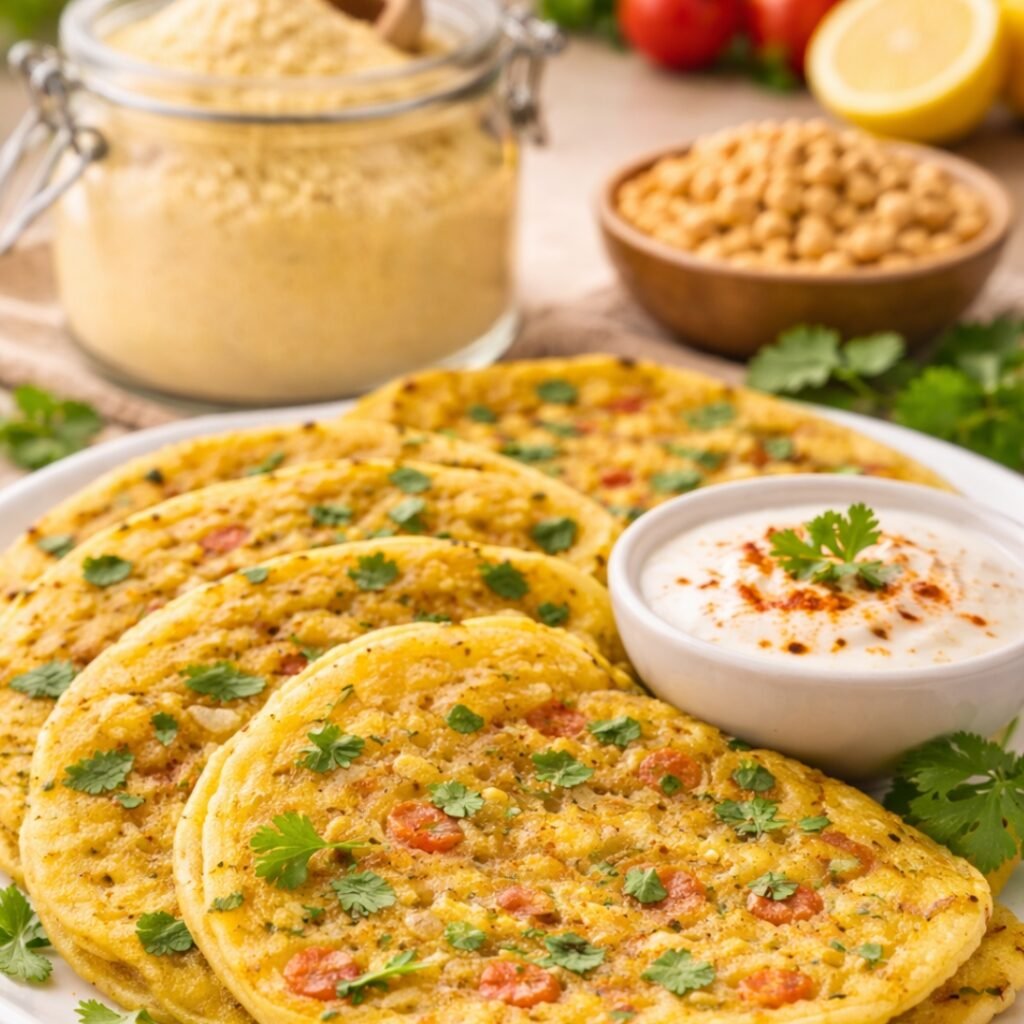
Savory Dishes
- Punjabi and Gujarati kadhi
- Pakora and bhaji batter
- Dhokla and steamed snacks
It provides even coating, strong binding, and consistent thickness.
Modern and Healthy Recipes
- Gluten-free baking
- Protein-rich pancakes
- Light baby food when properly roasted
Nutritional Value of Fine Besan
Fine besan is a nutritious ingredient that offers:
- High plant-based protein
- Rich dietary fiber
- Iron and magnesium
- Low glycemic index
- Naturally gluten-free benefits
Because it is purer and carefully processed, it retains more nutrients compared to adulterated varieties.
How to Identify High-Quality Fine Besan While Buying
Check the Color
Natural fine besan has a light yellow shade. Avoid unnaturally bright colors.
Feel the Texture
Rub a small amount between fingers—it should feel soft and silky.
Smell the Aroma
Fresh fine besan has a pleasant, nutty aroma. Sour or oily smells indicate poor quality.
Read the Label
Always look for:
- 100% chana dal
- No additives or preservatives
- Recent milling or packing date
Proper Storage of Fine Besan
To maintain freshness:
- Store in airtight containers
- Keep away from moisture and heat
- Refrigerate for long-term storage
- Use only dry utensils
Correct storage prevents spoilage, insects, and loss of aroma.
Click here to contact us to buy our premium products
Why Fine Besan Is Preferred for Commercial Use
Sweet shops, halwais, and food manufacturers prefer fine besan because it offers:
- Consistent texture and taste
- Better yield and binding
- Premium product appearance
- Reliable performance in bulk cooking
- For businesses, fine besan ensures uniform quality and customer satisfaction.
Conclusion
Fine besan is much more than ordinary gram flour—it represents quality, purity, and superior cooking performance. Its smooth texture, natural composition, and refined processing make it suitable for both traditional recipes and modern culinary applications. Whether you are cooking at home or producing food commercially, choosing fine besan guarantees better taste, even cooking, and a premium finish.
By understanding how texture influences cooking, how purity impacts nutrition, and how processing defines quality, you can make informed decisions when selecting besan. In the end, exceptional dishes always begin with superior ingredients—and fine besan truly makes all the difference.
A. Fine Besan is ultra-milled and undergoes multiple sieving processes to achieve a silky, powdery consistency. Regular besan is typically coarser. While regular besan is great for crunchy snacks like pakoras, Fine Besan is superior for sweets, gravies, and steamed snacks where a smooth, lump-free texture is required.
A. In sweets like Besan Barfi or Mohanthal, texture is the most important factor. Fine besan absorbs sugar syrup (chashni) more uniformly than coarse varieties. This ensures a “melt-in-the-mouth” experience and prevents the raw, gritty aftertaste often found in lower-quality flours.
A. To preserve the aroma and prevent spoilage, store Fine Besan in an airtight container in a cool, dry place. Exposure to moisture can cause lumps and lead to infestation. For bulk storage, keeping it in a refrigerated environment can extend its shelf life and freshness.
Leave A Comment