
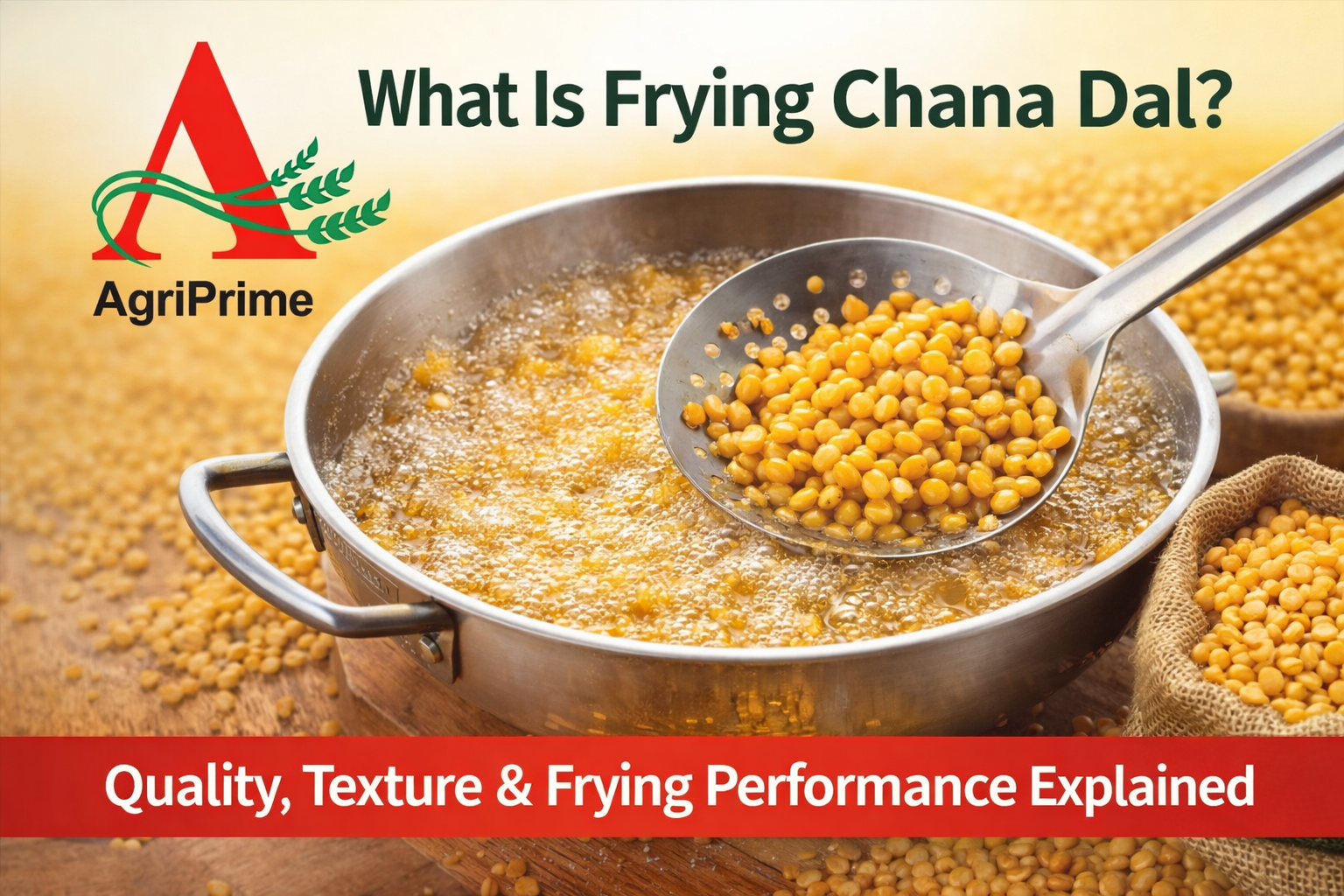
Chana dal is one of the most widely used pulses in Indian households and the food processing industry. Among its many forms, frying chana dal holds a special place due to its unique behavior during frying, crisp texture, and ability to absorb flavors. It is commonly used in namkeen, snacks, farsan, and ready-to-eat food products. But what exactly is and what makes it suitable for frying? This blog explores it in detail, focusing on its quality parameters, texture, and performance.
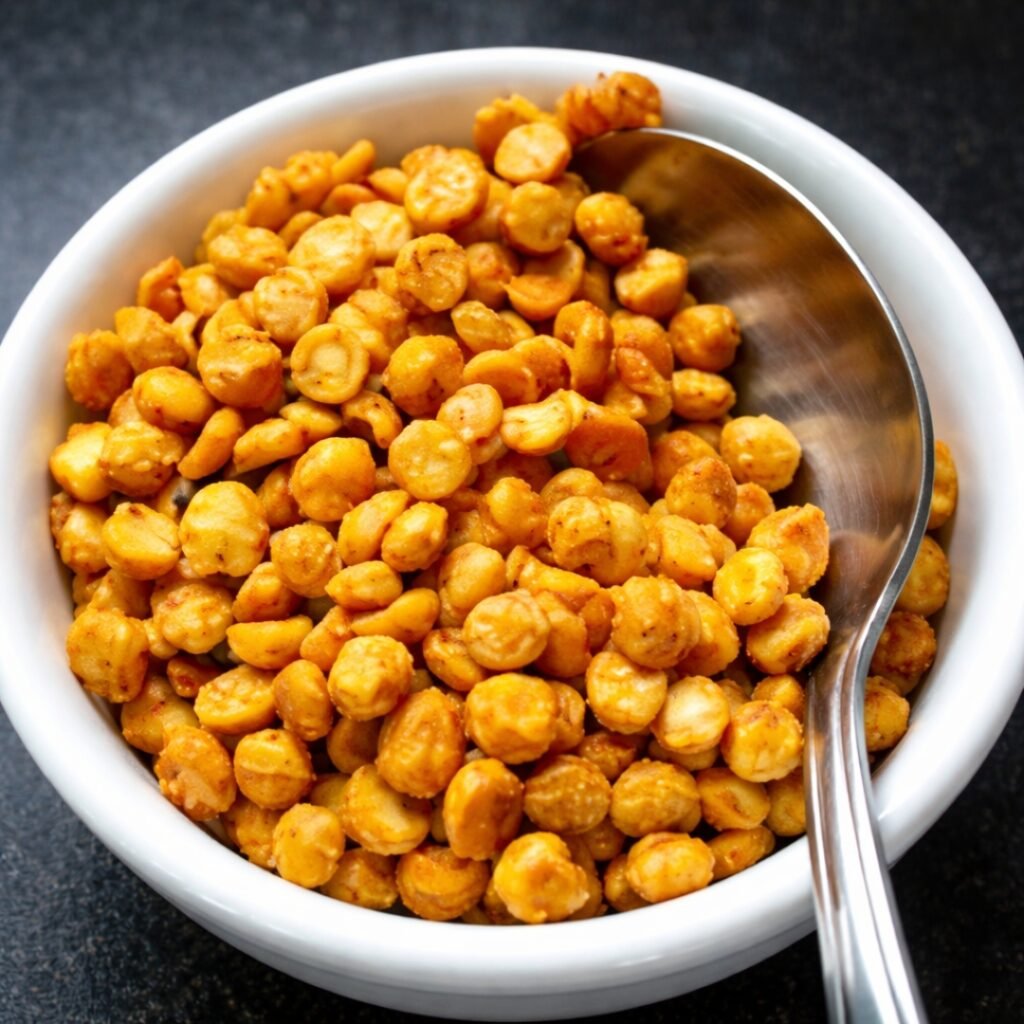
What Is Frying Chana Dal?
It is a special grade of split chickpeas (Bengal gram) that is processed and selected specifically for frying applications. Unlike regular chana dal used for cooking dals or curries, It is chosen based on grain hardness, uniform size, low moisture content, and oil absorption capacity.
This variety is primarily used for:
- Deep-fried snacks
- Roasted and fried namkeen
- Coated snacks and mixtures
- Commercial food manufacturing
The main goal of it is to achieve maximum crispiness, even frying, and minimal oil retention, making it ideal for both taste and shelf life.
Key Quality Parameters of Frying Chana Dal
The quality of product
plays a crucial role in determining the final product’s appearance, taste, and texture. Below are the most important quality factors:
1. Grain Size and Uniformity
High-quality dal has uniform grain size, which ensures even frying. Uneven grains can cause some pieces to burn while others remain undercooked.
2. Hardness and Density
It should be hard and dense. This hardness helps the dal maintain its shape during frying and prevents it from breaking or turning powdery.
3. Moisture Content
Low moisture content (generally below 10%) is essential. Excess moisture can lead to:
- Oil splattering
- Uneven frying
- Reduced crispiness
4. Color and Appearance
Premium frying chana dal has a bright yellow to golden color, free from black spots, fungal marks, or discoloration. A clean appearance also improves the visual appeal of the fried product.
5. Purity and Cleanliness
Good frying chana dal is free from:
- Stones and dust
- Broken grains
- Foreign matter
High purity ensures better frying performance and food safety.
Click here to see our full product line
Texture Characteristics of Frying Chana Dal
Texture is the most important feature that differentiates frying chana dal from normal chana dal.
Crispiness After Frying
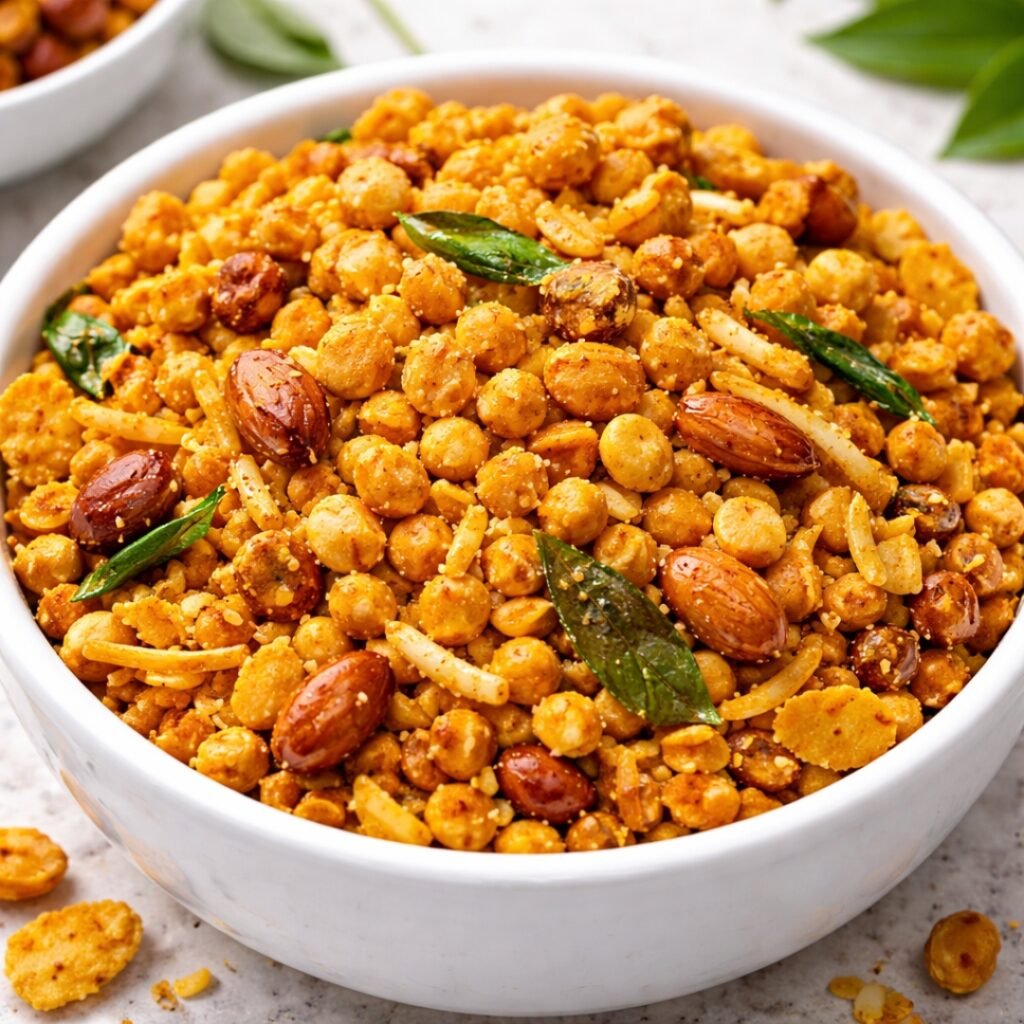
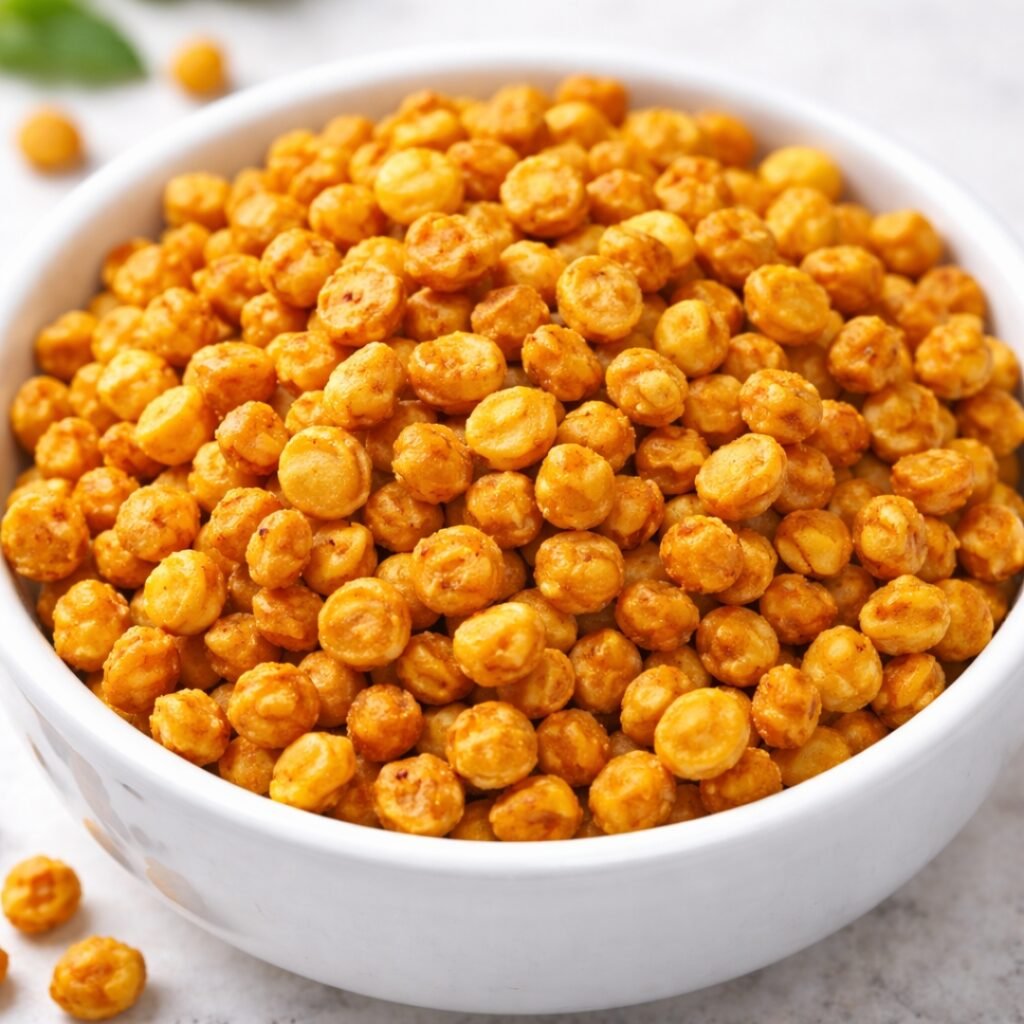
When fried properly, It develops a crisp outer layer while remaining light inside. This crispiness is what makes it popular in namkeen and snack mixes.
Expansion During Frying
High-quality frying chana dal slightly expands when fried, creating a light and crunchy bite. Poor quality dal either does not expand or becomes too hard.
Non-Chewy Mouthfeel
Unlike regular chana dal, frying chana dal does not become chewy after cooling. It remains crunchy for a longer time, which is essential for packaged snacks.
Breakage Resistance
Good texture also means the dal does not break easily during mixing, seasoning, or packaging.
Frying Performance Explained
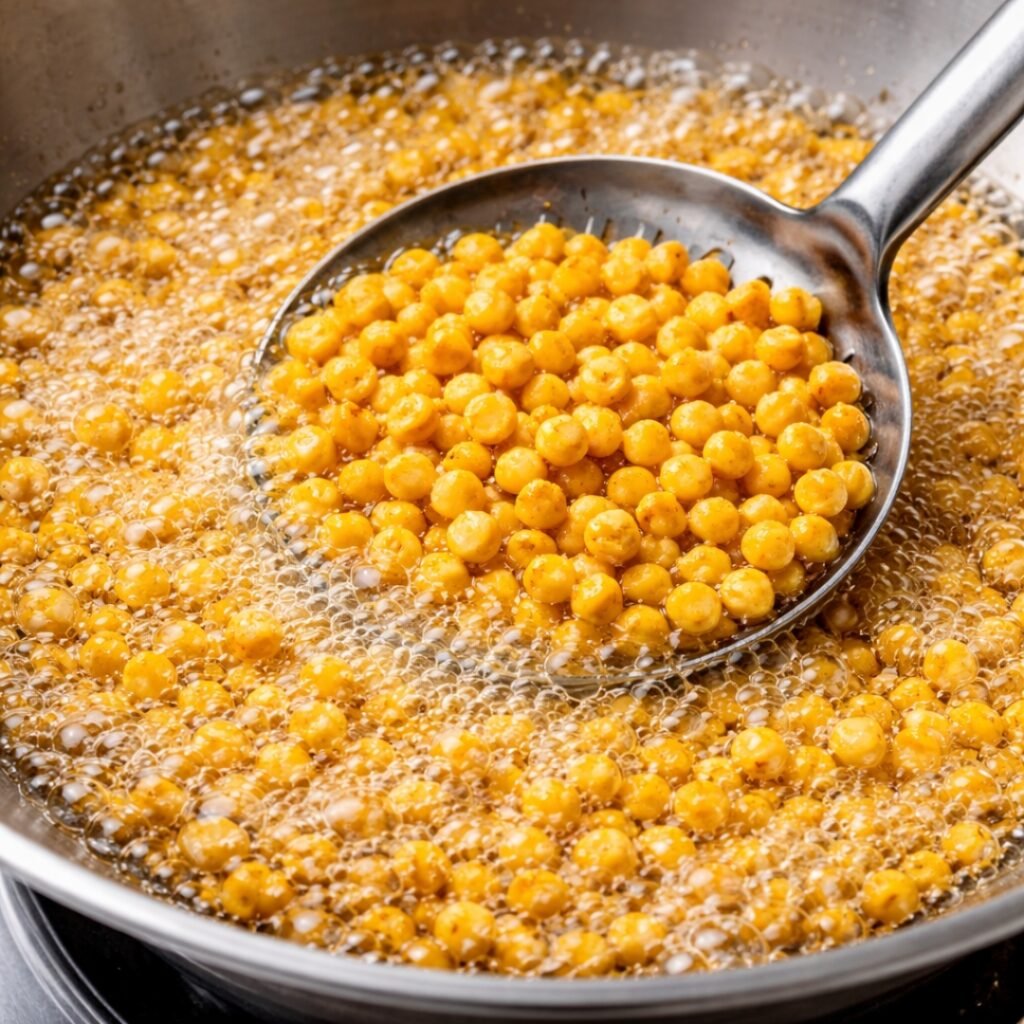
Frying performance refers to how well chana dal behaves during the process. This is a critical factor for commercial snack producers.
1. Even Frying
It fries evenly at controlled temperatures (usually 160–180°C). Uniform grains ensure consistent color and texture.
2. Oil Absorption
One of the biggest advantages of quality is low oil absorption. This makes snacks:
- Less greasy
- Healthier
- Longer-lasting
3. Color Stability
Good Quality develops a golden, attractive color without turning dark too quickly. Poor quality dal may burn or turn brown unevenly.
4. Flavor Absorption
It absorbs spices and seasonings very well after frying, enhancing the overall taste of the snack.
5. Shelf Life After Frying
Due to low moisture and oil retention, fried chana dal has a longer shelf life, making it suitable for packaged and exported food products.
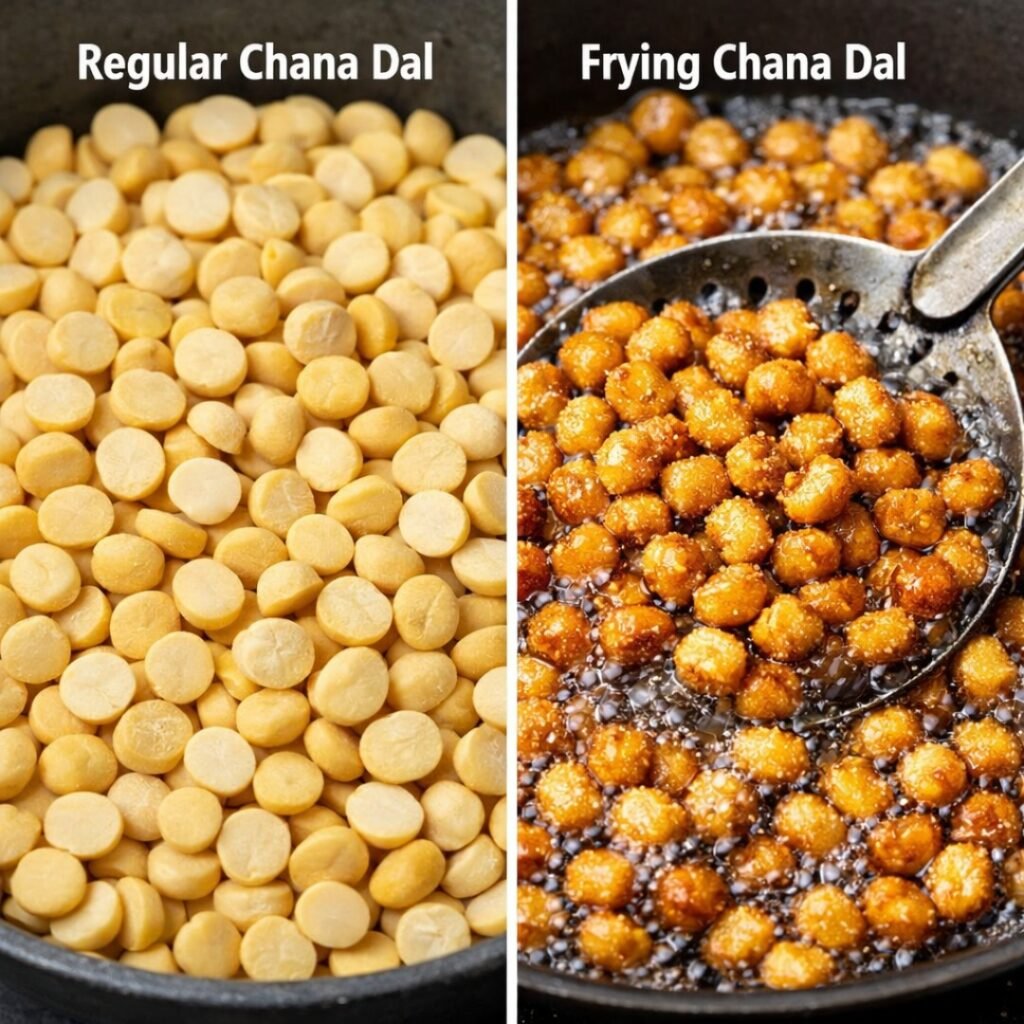
Difference Between Regular Chana Dal and Frying Chana Dal
| Aspect | Regular Chana Dal | Frying Chana Dal |
|---|---|---|
| Purpose | Cooking & curries | Frying & snacks |
| Grain hardness | Medium | High |
| Moisture | Higher | Low |
| Texture after frying | Hard or chewy | Crispy & light |
| Oil absorption | Higher | Lower |
Click here to contact us to buy our premium products
Uses of Frying Chana Dal
It is widely used in:
- Namkeen mixtures
- Spicy fried dal snacks
- Roasted and fried pulses
- Coated snacks and trail mixes
- Commercial ready-to-eat products
Its versatility makes it a valuable raw material in the food industry.
Conclusion
It is a specialized form of chana dal designed to deliver excellent performance, superior texture, and consistent quality. Its low moisture content, uniform grain size, hardness, and oil-resistant nature make it ideal for producing crispy, flavorful snacks. Understanding the quality parameters and frying behavior of chana dal helps manufacturers, traders, and even home cooks choose the right product for the best results.
Whether used in small-scale kitchens or large food processing units, high-quality it ensures better taste, longer shelf life, and higher consumer satisfaction. Selecting the right grade of chana dal is not just a matter of preference—it is the foundation of a successful fried snack product.
A. Absolutely. One of the biggest pain points for manufacturers is price and quality fluctuation during off-seasons. AgriPrime maintains large-scale storage facilities in Bikaner. We ensure that the quality, moisture level, and price of your raw material remain stable, even when the market is volatile.
A. Quality assurance is our priority. Every batch undergoes stringent quality checks. Our dal is free from artificial colors, polishing agents, and harmful chemicals. We provide “Food Grade” certification that helps your brand comply with FSSAI and international food safety standards.
A. Yes. Our Frying Chana Dal is double-cleaned and machine-sorted to ensure it is free from stones, dust, and broken grains, making it “ready-to-fry” for commercial kitchens.
Leave A Comment